

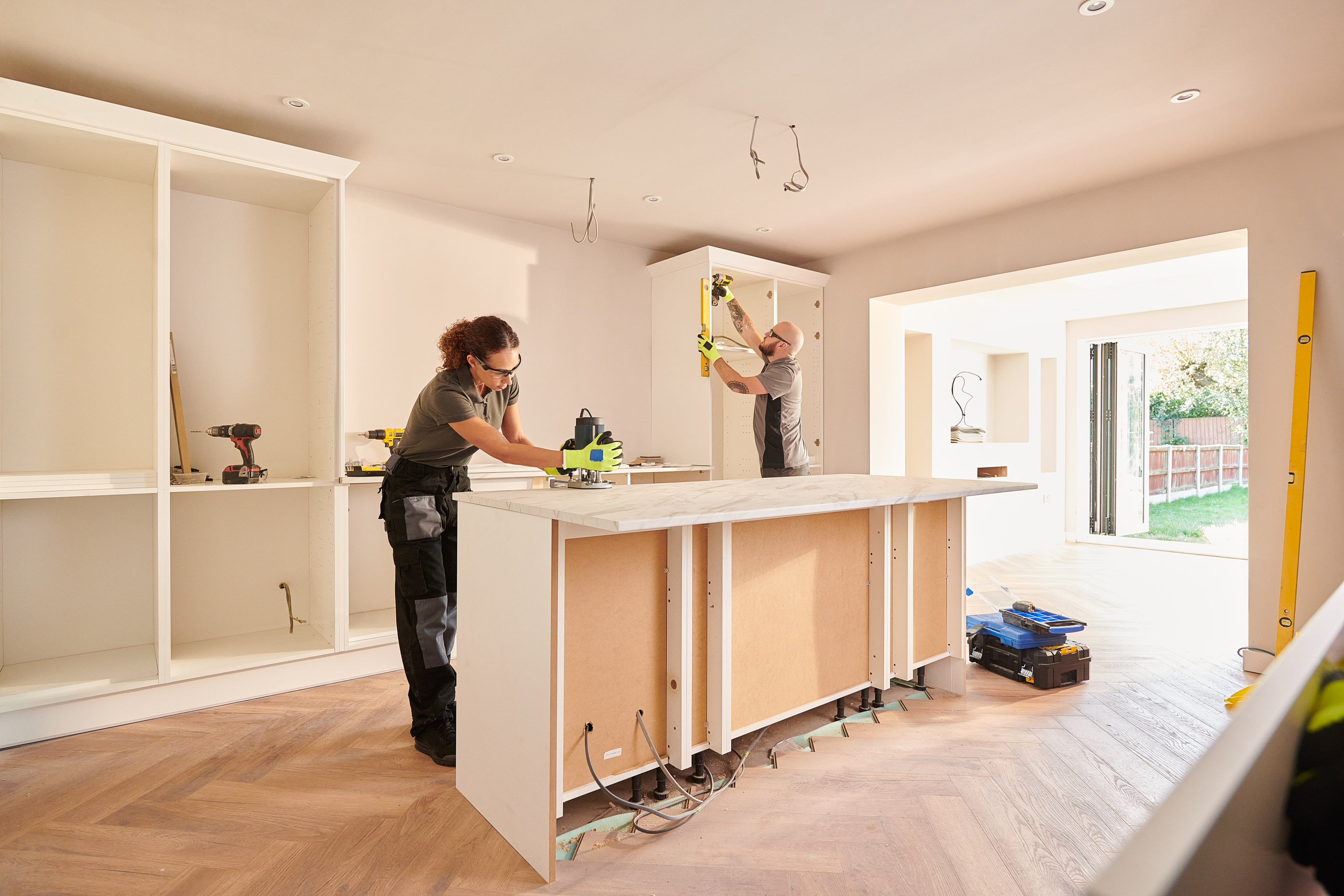
Tired of hearing about 18-month custom home timelines from every builder you meet?
The typical custom home builder in Sarasota quotes 12 to 18 months for project completion—and often runs months beyond even those extended timelines. Delays cascade from poor planning, communication breakdowns, material shortages, and reactive rather than proactive project management. Meanwhile, you're paying rent or a mortgage on your existing home, living out of boxes, and watching your construction loan interest accumulate month after month.
At Bettencourt Construction, we've revolutionized the custom home building timeline. We consistently deliver completed custom homes in Tampa Bay in just 8 months from groundbreaking to final certificate of occupancy—without compromising the quality, attention to detail, or collaborative design process that defines the Bettencourt Advantage. In fact, our accelerated timeline often produces superior results because it's built on meticulous planning and proactive management rather than reactive problem-solving.
This comprehensive guide reveals exactly how we've achieved this dramatic timeline compression, transforming an industry notorious for delays into a predictable, efficient process that respects your time, budget, and peace of mind.
Most builders treat pre-construction as a necessary evil—something to rush through to get to the "real work" of construction. This fundamental misunderstanding causes the majority of delays, cost overruns, and quality problems that plague custom home projects. Our accelerated timeline actually begins before the first shovel breaks ground, with comprehensive pre-construction planning that eliminates the surprises and conflicts that derail typical projects.
Comprehensive Architectural Coordination
We begin every project with thorough architectural coordination between our construction team, your architect, structural engineers, and MEP (mechanical, electrical, plumbing) consultants. Before construction documents are finalized, our team reviews preliminary plans to identify potential constructability issues, value engineering opportunities, and schedule impacts.
This early coordination catches problems while they're still lines on paper, not concrete and steel in the ground. We might identify a structural detail that's difficult to execute or source, proposing an alternative that's equally effective but more readily available. We might recognize that the HVAC layout requires revision to accommodate structural elements, preventing costly changes when ductwork conflicts with beams during rough-in.
This front-loaded collaboration adds 2-3 weeks to the pre-construction timeline but saves 6-12 weeks during construction by preventing the "discover and fix" cycle that plagues reactive builders. Our St. Petersburg custom home building projects benefit from this proactive approach throughout the process.
Advanced Permit Planning and Processing
Permitting timelines vary dramatically based on jurisdiction, project complexity, and submission quality. A complete, accurate permit submission reviewed by the right people at the right time might achieve approval in 4-6 weeks. An incomplete submission with conflicts and questions could languish for 12-16 weeks through multiple review cycles.
We maintain relationships with building officials, plan reviewers, and permitting staff throughout Pinellas County, Sarasota, and Hillsborough County. These relationships aren't about shortcuts—they're about understanding each jurisdiction's specific requirements, documentation preferences, and review processes. We know that Clearwater prefers certain engineering details formatted specific ways. We understand that St. Petersburg has particular expectations about stormwater documentation. This knowledge allows us to submit complete, accurate applications that move through review efficiently.
We also strategically time permit submissions. Submitting during slower periods or coordinating with reviewers' schedules can meaningfully accelerate approvals. And when questions arise—they always do on complex custom homes—our relationships ensure quick responses rather than submissions sitting in queues waiting for clarification.
Material and Equipment Lead Time Management
Custom home construction involves hundreds of material and equipment selections with lead times ranging from days to months. Windows, doors, custom cabinetry, luxury appliances, tile and stone materials, lighting fixtures, plumbing fixtures—each category has its own sourcing complexity and delivery timeline.
Most builders address lead times reactively: order when needed, then deal with delays as they arise. This guarantees schedule disruptions. We address lead times proactively during pre-construction, identifying long-lead items and establishing procurement schedules that ensure materials arrive when needed—not weeks late or months early.
Custom windows and doors often carry 10-16 week lead times. We order these during permitting, coordinating delivery with projected rough-in completion. Custom cabinetry requires 8-12 weeks fabrication after final measurements. We schedule templating to allow fabrication during framing and rough-in, ensuring cabinets arrive for interior finish work. Specialty tile or stone with extended lead times gets ordered early with proper storage provisions.
This procurement choreography is managed through BuilderTrend, our project management platform that tracks every order, monitors delivery dates, and alerts us to potential delays while there's still time to find solutions. The result? Materials arrive when needed, preventing the costly delays that occur when framing crews sit idle waiting for windows or finish carpenters can't proceed without cabinets.
Subcontractor Schedule Coordination
Our 30+ years in business have allowed us to cultivate relationships with Florida's finest trade partners—electricians, plumbers, HVAC contractors, framers, roofers, and specialty trades who consistently deliver exceptional work. But even the best subcontractors can't perform miracles if they're scheduled reactively.
During pre-construction, we develop a comprehensive construction schedule showing exactly when each trade needs to be on site. We coordinate this schedule with our subcontractors months in advance, securing their commitment to specific timeframes. This advance scheduling ensures our preferred teams are available when needed rather than us competing for their time with other projects.
When subcontractors know exactly when they'll be needed and can plan their workforce accordingly, they deliver more efficiently. A framing crew that arrives knowing they have three uninterrupted weeks to complete their scope works faster than a crew that's constantly being pulled to other jobs due to poor scheduling. This predictability benefits everyone—subcontractors, the schedule, and ultimately you.
Communication failures cause more construction delays than any other single factor. When the builder doesn't communicate design decisions to the electrician, outlets end up in wrong locations. When the homeowner doesn't realize a selection deadline has passed, the project stalls waiting for decisions. When subcontractors don't know the current schedule, they arrive when they're not needed or miss critical windows.
BuilderTrend eliminates these communication failures through a centralized platform that connects every project stakeholder—owners, builders, architects, engineers, subcontractors, suppliers, and lenders—in real-time collaboration.
Automated Scheduling and Notifications
BuilderTrend maintains a dynamic construction schedule that automatically notifies stakeholders of upcoming activities. When framing completion approaches, the HVAC contractor receives automated notifications about rough-in scheduling. When your tile selection deadline approaches, you receive automated reminders with links to selection galleries. When inspections are scheduled, the relevant trades receive notifications to ensure required work is complete.
These automated workflows eliminate the constant phone calls, emails, and texts that consume hours of project management time in traditional construction. More importantly, they prevent the "I didn't know" situations that cause delays. Everyone knows what's happening, what's coming next, and what actions they need to take.
Daily Progress Documentation
Every Bettencourt project includes daily progress photo documentation uploaded to BuilderTrend. You see exactly what happened on site each day—progress made, trades present, weather conditions, and any issues encountered. This visibility is particularly valuable for clients building second homes or living elsewhere during construction, like the Canadian families we frequently serve in Gulf Coast custom home construction.
But daily photos serve purposes beyond client communication. They create a permanent visual record of construction sequencing useful for warranty issues, insurance claims, or future renovation planning. They allow our project managers to monitor multiple sites without visiting each one daily. And they keep subcontractors accountable to quality standards knowing their work is documented and visible.
Selection Management and Decision Tracking
The selection process—choosing every finish, fixture, and feature in your custom home—involves thousands of decisions. Poor selection management guarantees delays. When decisions are made too late, materials can't be ordered in time. When decisions are made too early without proper context, expensive changes occur when you see the space taking shape.
BuilderTrend's selection management tools provide structured workflows that present decisions when they're needed, not too early or too late. You access selection libraries with products, images, specifications, and pricing. The system tracks deadline dates and sends reminders as deadlines approach. Approved selections automatically trigger material orders with our suppliers.
This structured approach prevents the decision paralysis that overwhelms many clients and the delayed decisions that push schedules. You make thoughtful, confident selections with adequate context and time, while maintaining the schedule through systematic deadline management.
Financial Transparency and Budget Tracking
BuilderTrend provides complete budget transparency throughout construction. You see original estimates, current actuals, pending change orders, and projected final costs for every line item. When you're considering an upgrade or addition, you see the cost impact immediately with context about how it affects your overall budget.
This transparency eliminates the trust issues that can develop when clients don't understand where money is going. You're never surprised by costs because you have constant visibility. And you make informed decisions about changes because you understand financial implications clearly.
Construction loan draw management integrates with BuilderTrend, streamlining the documentation and inspection process required for construction loan funding. This reduces draw processing time from weeks to days, ensuring cash flow doesn't become a schedule constraint.
The quality and efficiency of subcontractors fundamentally determines custom home construction success. We've built relationships with exceptional trade partners over three decades—relationships built on mutual respect, consistent work, and shared commitment to excellence.
Priority Scheduling and Dedicated Resources
Our volume and reputation provide scheduling advantages with Florida's best subcontractors. When we commit to a timeline with a trade partner, they dedicate resources to meet that timeline. They're not constantly juggling our project with others because they know we'll have the site ready when promised and we'll support their work with proper planning and coordination.
A plumbing contractor who receives detailed, accurate plans weeks before rough-in can prefabricate components off-site and stage materials efficiently. They arrive on site with exactly what's needed, complete their scope efficiently, and move to the next phase without delays. This efficiency compounds across every trade, compressing the schedule while maintaining quality.
Collaborative Problem Solving
Even with perfect planning, construction presents unexpected challenges. Soil conditions differ from borings predictions. Utilities are found where plans showed clear space. Weather forces schedule adjustments. The difference between mediocre and exceptional builders is how they handle these inevitable surprises.
Our trade relationships enable collaborative problem solving rather than adversarial finger-pointing. When an issue arises, we gather the relevant trades and engineers to develop solutions quickly. Our electrician might suggest routing changes that avoid a structural conflict. Our framer might recommend a modification that achieves the design intent with materials that are actually available. This collaboration prevents the delays that occur when each party waits for formal engineering changes before proceeding.
Quality Accountability
Our long-term relationships with subcontractors create accountability that one-time engagements can't match. When a trade partner knows they'll work with us again on the next project, they're motivated to deliver exceptional work. They know we'll support them when challenges arise, and they know we'll hold them accountable to our quality standards.
This accountability shows in the details. Electrical rough-in isn't just "good enough to pass inspection"—it's neat, organized, and installed with attention to how it will integrate with other systems. Framing isn't just structurally adequate—it's squared, plumbed, and detailed to facilitate drywall and trim installation. These quality-focused practices actually accelerate subsequent phases because trades aren't correcting poor prior work.
Traditional construction follows strictly sequential phases: complete foundation, then frame, then roof, then mechanicals, then finishes. This linear approach is simple to manage but inefficient, adding weeks to project timelines.
We employ parallel path construction strategies that strategically overlap activities where possible, compressing the schedule without creating chaos or quality issues.
Site Work and Foundation Concurrent Activities
While foundation work progresses, we advance site development activities that don't interfere with foundation construction. Utilities can be extended to the site perimeter while pilings are driven. Drainage systems can be roughed in while grade beams are poured. Driveway base preparation can proceed while foundation curing occurs.
These overlapping activities require careful coordination to prevent trades interfering with each other, but they can save 2-4 weeks on typical projects. The alternative—waiting for complete foundation completion before beginning any site work—adds weeks of idle time when activity could safely proceed.
Framing and Exterior Finishing Coordination
Once framing reaches substantial completion and roof sheathing is installed, exterior finishing work can begin while interior framing continues. Windows can be installed in completed walls while partition framing proceeds in other areas. Exterior siding or finishes can start while roof underlayment and final roofing advances.
This parallel approach requires more sophisticated scheduling because multiple trades work simultaneously in different areas. But it can compress the framing-to-dry-in timeline by 3-4 weeks on larger homes. The key is maintaining clear zone separation and communication so trades aren't stumbling over each other.
Mechanical Rough-In Choreography
Electrical, plumbing, HVAC, and low-voltage rough-in traditionally proceed sequentially, with each trade waiting for the previous to complete. This prevents conflicts but adds unnecessary time. We coordinate simultaneous rough-in with careful zone assignments and daily coordination meetings.
Electricians might rough-in second floor while plumbers rough-in first floor. HVAC trunk lines go in while electricians run home runs. Low voltage installers follow electrical rough-in by days rather than weeks. This choreography requires experienced project management—our superintendents conduct daily coordination meetings ensuring each trade knows exactly where they're working and how their activities integrate with others.
The time savings are substantial—3-4 weeks on typical projects—and the quality can actually improve because trades coordinate in real-time rather than working around previously installed conflicting systems.
Supply chain disruptions remain a challenge in construction despite improvements from pandemic-era chaos. Proactive material management prevents these disruptions from impacting your schedule.
Early Material Orders for Long-Lead Items
We place orders for long-lead materials—custom windows, doors, cabinetry, specialty appliances, tile and stone—as soon as selections are finalized, often during permitting or early construction. This advance ordering ensures materials arrive when needed rather than becoming critical path delays.
For example, impact-rated custom windows common in Florida Gulf Coast construction often carry 12-16 week lead times. Ordering during permitting allows delivery during framing completion, perfect timing for installation during dry-in. Waiting to order until framing starts would push delivery 3-4 months out, leaving the home sitting open to weather while waiting for windows.
Strategic Material Inventory and Staging
For materials that don't deteriorate in storage, we inventory items months before installation. Custom tile might be ordered and stored when selections are finalized, ensuring availability when tile work begins. Specialty lighting fixtures are secured early, preventing the delays that occur when manufacturers discontinue products or experience manufacturing issues.
This inventory strategy requires proper storage facilities—our warehouse provides climate-controlled storage for sensitive materials—but it provides insurance against supply chain disruptions that builders without this capability can't prevent.
Supplier Relationship Management
We maintain accounts and relationships with suppliers throughout Florida, providing multiple sourcing options for most materials. When a primary supplier encounters manufacturing delays or inventory issues, we have alternative sources ready. This supplier diversity prevents single-point failures that can derail schedules.
Our purchasing volume also provides priority access during material shortages. When lumber, plywood, or other commodities face supply constraints, established customers with ongoing volume get priority allocation. This preferential treatment can make the difference between maintaining schedule and experiencing weeks of delays waiting for material availability.
The difference between an 8-month timeline and an 18-month timeline often comes down to how quickly problems are identified and resolved. Reactive management addresses problems after they've already caused delays. Proactive management prevents problems or resolves them before they impact the schedule.
Weekly Lookahead Planning
Every week, our project management team conducts lookahead planning meetings analyzing the next 2-3 weeks of scheduled activities. We verify that required materials will arrive on time, subcontractors are scheduled and confirmed, inspections are scheduled with adequate notice, and owner decisions are made or upcoming.
This lookahead discipline identifies potential problems while there's still time to solve them. If a material delivery looks uncertain, we develop alternatives. If a subcontractor has a conflict, we adjust sequencing or secure backup resources. If an owner decision is approaching deadline, we escalate communication to ensure timely input.
This proactive approach prevents the firefighting that consumes reactive builders' time. Instead of constantly responding to crises, we're preventing crises through disciplined forward planning.
Weather Contingency Planning
Florida weather presents construction challenges—afternoon thunderstorms, tropical systems, extended rainy periods. Rather than treating weather as an excuse for delays, we build weather contingencies into scheduling and have strategies to maintain progress despite weather.
Interior activities can proceed during rain once the building is dried in. Material deliveries are scheduled with weather windows in mind. Site work activities have backup dates built into the schedule. Critical concrete pours are planned with multi-day forecast windows and backup dates identified.
Real Project Example: Coastal Contemporary in Sarasota
Our recent Sarasota project demonstrates these timeline principles in practice. This 3,200-square-foot coastal contemporary home included elevated construction, extensive glass, custom finishes, and sophisticated automation—complexity that typically extends timelines.
Project Timeline Breakdown:
Total Timeline: 45 weeks (under 11 months) from groundbreaking to turnover, including 3 weeks of weather delays from tropical storm activity. Even with significant weather disruptions, we delivered in under our 8-month average because proactive schedule management recovered time lost to weather.
One of the most common complaints about custom home builders: clients feel ghosted, left wondering what's happening with their project, uncertain about schedule or budget status. This communication failure creates anxiety and erodes trust even when construction is actually proceeding well.
The Bettencourt Advantage includes commitment to proactive, transparent communication throughout your project. You'll never wonder what's happening because we ensure you always know.
Weekly Progress Updates
Every client receives detailed weekly progress updates via BuilderTrend and email. These updates summarize:
These updates are narrative summaries, not just construction jargon—we explain what's happening in language that makes sense to homeowners, not just contractors. You understand where your project stands and what's coming next.
Proactive Issue Communication
When problems arise—and they occasionally do on every construction project—we communicate immediately with explanation and solution plans. You learn about issues from us, not from discovering them during a site visit. This proactive disclosure builds trust and prevents the anxiety that develops when clients wonder what they don't know.
Responsive Daily Communication
Between weekly updates, we remain accessible for questions and real-time communication. Text, email, phone, BuilderTrend messaging—we respond to client communication same-day, typically within hours. You're never left wondering whether your message was received or when you'll get a response.
This responsiveness is fundamental to our timeline success. Quick decision turnaround prevents schedule delays. Rapid problem resolution prevents small issues from becoming major disruptions. And client confidence allows construction to proceed without the hesitation that occurs when trust erodes.
BuilderTrend accessibility means you can engage with your project from anywhere, at any time. This is particularly valuable for the many clients who build vacation homes in Sarasota or second homes throughout Florida's Gulf Coast while living elsewhere.
Daily Photo Updates
Log into BuilderTrend from anywhere to see daily progress photos. View what trades are on site. See how framing is advancing. Watch your home take shape day by day. This visibility creates connection to your project and eliminates the anxiety of wondering what's happening.
We've built custom homes for Canadian families who remained in Canada throughout construction, following their project daily through BuilderTrend. We've served Tampa-based clients building in Sarasota who monitored progress between monthly site visits. We've worked with clients traveling internationally who stayed connected to their project from anywhere with internet access.
Virtual Meetings and Walkthroughs
Video conferencing through BuilderTrend enables virtual meetings and site walkthroughs. Our superintendent can video-call you from the site to discuss questions or show specific details. You can participate in decision meetings without traveling to the site. This virtual engagement maintains communication quality while respecting your time and schedule.
Document Access and Selection Management
All project documents—plans, specifications, permits, contracts, change orders, selections—are stored in BuilderTrend with 24/7 access. Need to reference the electrical plan? Log in from anywhere and view it. Want to review your kitchen cabinet selections? They're in your online account with images and specifications. This document accessibility prevents the constant "can you send me that plan" phone calls that waste time in traditional construction.
An accelerated construction timeline provides benefits beyond just moving into your home sooner—though that's obviously valuable.
Reduced Carrying Costs
Every month of construction means another month of construction loan interest, interim housing costs if you've already sold your previous home, or double housing expenses if you're maintaining your existing residence. An 8-month construction timeline versus 18 months saves 10 months of these carrying costs—potentially $15,000 to $40,000 depending on your loan size and housing situation.
Fixed-Price Protection
Construction costs generally trend upward over time. Locking in pricing and completing construction quickly provides protection against inflation and material cost escalation. The longer a project extends, the more opportunity for price changes that affect budget.
Market Timing Advantages
For clients building with intention to sell relatively quickly—vacation home buyers, investors, or those building for near-term relocation—fast construction timelines improve market timing. You can list your home during favorable market conditions rather than missing optimal selling seasons due to extended construction.
Reduced Stress and Life Disruption
Living in interim housing, managing two residences, or coordinating long-distance construction creates stress and life disruption. An 8-month timeline minimizes this disruption period, allowing you to settle into your new home and re-establish normal life patterns twice as fast as typical builders deliver.
If 8-month custom home construction is possible, why don't all builders deliver on this timeline? Several factors separate Bettencourt from builders who consistently run 12-18+ months:
Experience and Systems
We've refined our process over 30+ years and hundreds of projects. We know what works, what doesn't, and how to prevent problems. Newer builders or those without sophisticated systems simply can't execute at this level because they haven't developed the knowledge and processes required.
Trade Relationships
Our subcontractor relationships provide priority scheduling and collaboration that builders without these relationships can't achieve. Trades work more efficiently when they know the builder, trust the schedule, and understand expectations. One-time relationships don't provide these advantages.
Project Management Technology
BuilderTrend implementation requires investment in technology, training, and process development. Many builders use primitive scheduling and communication tools—spreadsheets, email, phone calls—that can't provide the coordination required for complex projects. Without sophisticated project management technology, accelerated timelines are essentially impossible.
Financial Resources
Fast timelines require financial resources to inventory materials, maintain warehousing, and fund construction with minimal draw lag. Builders operating on tight cash flow can't maintain the inventory and resource investments that enable timeline compression.
Commitment to Communication
Proactive communication requires time and discipline. Many builders simply don't prioritize communication, leaving clients wondering and decisions delayed. This communication failure inevitably extends timelines.
Does faster construction mean lower quality?
Absolutely not. Our accelerated timeline results from better planning and management, not cutting corners. We often deliver superior quality precisely because we're not rushing to make up for poor planning. Every Bettencourt home meets our exacting quality standards regardless of timeline.
What if I want to make changes during construction?
We accommodate changes throughout construction—that's part of the custom building experience. Changes may affect timeline depending on scope and timing, but BuilderTrend immediately shows you schedule implications before you approve changes. You make informed decisions understanding both cost and schedule impacts.
Do you ever miss your 8-month target?
Occasionally, yes—unusual weather, owner-requested scope changes, or rare permit delays can extend timelines. But even when we exceed 8 months, we typically deliver in 9-10 months—still dramatically faster than industry norms. And we communicate proactively about any timeline changes as soon as they're identified.
How do you handle hurricane season?
Florida hurricane season runs June through November. We plan construction schedules considering hurricane season timing and have protocols for securing sites during tropical weather. While major hurricanes can cause temporary delays, our proactive planning minimizes these impacts. Many of our projects span hurricane season without significant delays because we prepare appropriately.
Can you deliver faster than 8 months?
For some projects, yes. Simpler floor plans, readily available materials, and streamlined finishes can allow 6-7 month timelines. We evaluate each project individually to determine realistic timelines based on specific characteristics. We never promise unrealistic timelines just to win projects—our estimates reflect what we can actually deliver.
If you're tired of hearing vague timeline promises from builders who can't commit to delivery dates, or if you've experienced the frustration of construction projects that drag on for months beyond promised completion, you deserve better.
Schedule a consultation with Bettencourt Construction to discuss your custom home in Sarasota, St. Petersburg, Clearwater, or anywhere in Tampa Bay. We'll explain exactly how we'll deliver your dream home in 8 months while maintaining the quality, communication, and attention to detail that define the Bettencourt Advantage.
Your custom home shouldn't take 18 months. It should take 8. Let us prove it.
Want dramatically lower utility bills and superior comfort in your Gulf Coast custom home?
Energy efficiency isn't just an environmental consideration or a nice-to-have feature—it's a financial imperative for Florida homeowners facing scorching summers, high humidity, and electricity rates that can push monthly bills beyond $400-$600 for poorly insulated homes. At Bettencourt Construction, every custom home we build in Tampa Bay includes closed-cell spray foam insulation throughout as standard—not an upgrade or option, but a fundamental component of how we build homes that deliver exceptional comfort and energy performance for decades.
After 30 years of building luxury custom homes across Florida's Gulf Coast, we've seen firsthand the dramatic performance difference between homes insulated with traditional methods and those built with closed-cell foam. The difference isn't subtle—it's transformative. Homes with closed-cell foam consistently achieve energy bills 40-60% lower than comparable homes with standard insulation, maintain superior indoor air quality, resist moisture and humidity issues that plague coastal construction, and provide better hurricane resilience through enhanced structural performance.
This comprehensive guide explains why closed-cell spray foam represents the gold standard for Florida coastal custom home construction, breaking down the science, performance data, cost-benefit analysis, and long-term value that make it an obvious choice for homeowners who demand the best.
Before exploring closed-cell foam's advantages, it's important to understand why traditional insulation methods fail to deliver optimal performance in Florida's challenging climate.
Fiberglass Batt Insulation: The Industry Standard That Shouldn't Be
Fiberglass batt insulation—those pink or yellow rolls or batts stuffed between studs—remains the most common insulation method in production home building. It's cheap, familiar to builders, and meets minimum code requirements. But meeting minimum requirements is very different from delivering optimal performance.
Fiberglass provides thermal resistance (R-value) when installed perfectly, but several fundamental problems limit real-world performance:
Air Infiltration: Fiberglass does nothing to prevent air infiltration through gaps, cracks, and penetrations in the building envelope. Even with perfect installation—which is rare—air moves freely through and around fiberglass, carrying heat and humidity that undermines the insulation's theoretical R-value. Studies show actual installed R-values of fiberglass systems often achieve only 50-70% of rated performance due to air infiltration.
Installation Quality Issues: Fiberglass performance depends entirely on installation quality. Gaps around electrical boxes, compressed batts around plumbing penetrations, missing insulation at headers and band joists—these installation defects are nearly universal in production building and dramatically reduce performance. Even when installation looks acceptable from inside, hidden gaps and voids allow air movement that undermines efficiency.
Moisture Absorption: Fiberglass absorbs moisture, and wet fiberglass provides essentially zero insulation value. In Florida's humid climate, moisture infiltration through building envelope defects wets fiberglass insulation, degrading performance. Even after drying, compressed fiberglass never fully recovers its insulating properties.
Settling and Compression: Over time, fiberglass batts settle within wall cavities and compress under their own weight in attics, creating gaps and voids where none existed during installation. This performance degradation accelerates in coastal environments where vibration from wind and storms compounds settling.
Blown-In Fiberglass and Cellulose: Marginal Improvements
Blown-in fiberglass or cellulose insulation addresses some of batt insulation's installation quality issues by filling cavities more completely. But these materials still provide no air sealing, absorb moisture, and settle over time. They represent incremental improvements over batts but still fall far short of optimal performance.
Closed-cell spray foam insulation fundamentally differs from traditional insulation materials because it provides both insulation and air sealing in a single application. This dual function creates a truly sealed building envelope that delivers performance traditional methods simply cannot match.
The Science of Closed-Cell Foam
Closed-cell spray foam consists of two liquid components—isocyanate and polyol resin—that are mixed and sprayed onto surfaces where they expand 30-50 times their liquid volume and cure into rigid foam. The resulting material contains millions of tiny closed cells filled with gas, creating both thermal resistance and air impermeability.
The "closed-cell" designation is critical—each cell is completely sealed, preventing air and moisture migration through the material. This contrasts with open-cell foam, which has cells that interconnect and allow air movement. While open-cell foam provides some benefits over traditional insulation, it lacks closed-cell foam's superior air sealing and moisture resistance critical for coastal applications.
Closed-cell foam provides approximately R-6 to R-7 per inch of thickness—higher R-value per inch than any common insulation material. But R-value tells only part of the performance story. The real advantages come from closed-cell foam's additional properties that multiply its effectiveness.
Complete Air Sealing: The Hidden Performance Multiplier
Air infiltration—outside air entering the building envelope through cracks, gaps, and penetrations—undermines insulation effectiveness and drives both energy consumption and comfort problems. Traditional insulation does nothing to prevent air infiltration; it only slows conductive heat transfer through insulated assemblies.
Closed-cell foam eliminates air infiltration by creating a continuous air barrier that seals every gap, crack, and penetration. The foam expands to fill irregular cavities, seals around electrical boxes and plumbing penetrations, and creates an airtight envelope from foundation to roof deck.
This air sealing provides benefits beyond reduced energy consumption:
Eliminated Draft and Cold Spots: Air leaks create drafts and cold spots even in insulated walls. Sealed building envelopes eliminate these comfort issues, creating consistent temperatures throughout the home.
Humidity Control: In Florida's humid climate, air infiltration brings outdoor humidity indoors, forcing HVAC systems to work overtime removing moisture. Sealed envelopes prevent this humidity infiltration, dramatically reducing dehumidification loads and improving comfort.
Improved Indoor Air Quality: Air sealing prevents outdoor pollutants, allergens, and contaminants from infiltrating living spaces. This creates healthier indoor environments particularly beneficial for family members with allergies or respiratory sensitivities.
Pest Prevention: Sealed envelopes eliminate the pathways insects and rodents use to enter homes. While not a primary benefit, this pest resistance provides welcome secondary value in Florida where pest pressure is constant.
Florida building code requires new homes achieve a blower door test result of 7 ACH50 (air changes per hour at 50 pascals pressure differential) or lower. This test measures how airtight a home's envelope is—lower numbers indicate tighter buildings that waste less energy on air infiltration.
Most production builders aim for barely meeting code at 6.5 to 7.0 ACH50. This minimalist approach checks the regulatory box but delivers mediocre performance. Every Bettencourt custom home in Pinellas County achieves 4.0 ACH50 or better—nearly twice as airtight as code requires and dramatically more efficient than typical new construction.
What These Numbers Mean in Real-World Performance
The difference between 7.0 ACH50 (code-minimum) and 4.0 ACH50 (Bettencourt standard) might seem modest, but the performance implications are substantial:
At 7.0 ACH50, a 2,500-square-foot home exchanges its entire volume of air with unconditioned outdoor air approximately every 12-15 hours under typical conditions. Your HVAC system must constantly heat or cool this infiltrating air while also conditioning the space.
At 4.0 ACH50, the same home exchanges air every 21-24 hours—nearly half the air infiltration. This dramatically reduces the load on your HVAC system, cutting runtime and energy consumption while improving comfort through more stable temperatures and humidity.
The energy savings compound because reduced air infiltration allows proper HVAC sizing. Code-minimum homes require larger equipment to compensate for infiltration losses. Tightly sealed homes can use appropriately sized equipment that operates more efficiently and provides better comfort through longer, more effective run cycles.
How We Consistently Achieve Superior Blower Door Results
Achieving 4.0 ACH50 results consistently requires more than just using closed-cell foam—it requires systematic attention to building envelope details throughout construction.
We seal the building envelope from foundation to roof:
This systematic approach eliminates the pathways that allow air infiltration in typical construction. The result: consistent, verified performance that meets or exceeds our 4.0 target on every project.
Florida's coastal environment presents unique challenges that make closed-cell foam particularly advantageous compared to traditional insulation.
Superior Humidity Control
Florida's outdoor relative humidity frequently exceeds 80%, creating constant pressure to infiltrate building envelopes. When humid outdoor air enters wall cavities or attics through gaps and cracks, it contacts cooler surfaces and condenses, creating moisture problems that lead to mold, mildew, wood rot, and indoor air quality issues.
Closed-cell foam's air impermeability prevents this humidity infiltration at its source. Humid outdoor air simply can't penetrate the foam barrier, keeping moisture out of wall and roof assemblies. This moisture control provides multiple benefits:
Mold and Mildew Prevention: By keeping humidity out of assemblies, foam prevents the moisture conditions that support mold and mildew growth. This protection is particularly valuable in coastal homes where salt-laden humid air is particularly aggressive.
Wood Protection: Moisture is wood's primary enemy, causing rot, dimensional changes, and degradation. Foam-insulated assemblies keep framing dry, extending structural lifespan and preventing the decay issues common in coastal construction.
Improved HVAC Performance: When HVAC systems don't waste capacity removing infiltrating humidity, they operate more efficiently and maintain better comfort. The reduced latent load (moisture removal) allows sensible cooling (temperature reduction) at lower energy consumption.
Structural Enhancement Through Foam Adhesion
An often-overlooked benefit of closed-cell foam: it adhesively bonds to framing members, adding significant racking strength to wall and roof assemblies. Testing shows closed-cell foam increases wall assembly shear strength by approximately 200-300% compared to conventionally insulated walls.
This structural contribution enhances hurricane resistance in Gulf Coast custom home construction, providing yet another layer of storm protection. While foam alone doesn't replace proper structural engineering and connections, it provides meaningful supplemental strength that improves building performance under extreme wind loads.
The foam's adhesion to sheathing and framing also prevents panel flutter and vibration during wind events, reducing the fatigue loads that can cause fastener withdrawal and panel failure in conventionally insulated construction.
Resistance to Salt Air Corrosion
Coastal air carries salt particles that accelerate corrosion of metal components. Traditional insulation does nothing to protect structural connectors, fasteners, and mechanical components from this corrosive environment.
Closed-cell foam encapsulates metal components within wall and roof assemblies, protecting them from salt-laden air exposure. This corrosion protection extends the service life of connections and components that are impossible to inspect or maintain once covered by finishes.
Closed-cell foam costs more than traditional insulation—typically adding $8,000 to $15,000 to construction costs for a typical custom home. This premium causes some buyers to question whether the investment provides adequate return. The financial analysis is actually quite compelling.
Monthly Energy Savings
Energy savings vary based on home size, design, and occupant behavior, but our experience with hundreds of foam-insulated custom homes in Tampa Bay provides reliable performance data.
A 2,500-square-foot home with traditional insulation might consume 15,000-20,000 kWh annually for cooling, heating, and dehumidification at Florida's average $0.14 per kWh—$2,100 to $2,800 in annual energy costs. The same home with closed-cell foam typically consumes 9,000-12,000 kWh annually—$1,260 to $1,680 in energy costs.
Annual savings: $840 to $1,120
Monthly savings: $70 to $95
Over a 30-year period, these savings total $25,200 to $33,600 at current energy rates. Factor in 3% annual energy cost inflation, and lifetime savings exceed $40,000 to $55,000. Against an initial investment of $10,000 to $15,000, closed-cell foam delivers 3:1 to 4:1 return on investment through energy savings alone.
HVAC Equipment Sizing and Cost Savings
Superior envelope performance allows smaller, more efficient HVAC equipment. A home requiring 4 tons of air conditioning with traditional insulation might need only 3 tons with closed-cell foam—a savings of $3,000 to $5,000 on equipment costs.
Smaller equipment operates more efficiently at design conditions and provides better comfort through longer run cycles that improve dehumidification. The equipment cost savings provide immediate payback that reduces the foam premium from $10,000-$15,000 to $7,000-$10,000 after accounting for smaller HVAC systems.
Maintenance and Longevity Benefits
Closed-cell foam doesn't settle, compress, or degrade like traditional insulation. Performance remains consistent over decades rather than degrading over time. This longevity means energy savings persist at full value throughout the home's life rather than declining as traditional insulation degrades.
Moisture control benefits prevent mold remediation, wood replacement, and other moisture-related repairs that commonly occur in coastal homes with traditional insulation. While difficult to quantify precisely, avoiding even one $15,000 mold remediation event pays for the foam premium entirely.
Property Value Enhancement
Energy efficiency increasingly affects property values as buyers become more sophisticated about operating costs. Homes with documented superior energy performance—verified through blower door tests and utility bills—command premium prices and sell faster than less efficient comparable homes.
The difficulty in quantifying this value premium varies by market and buyer sophistication, but real estate professionals increasingly recognize that $1,000 in annual energy savings justifies $15,000 to $20,000 in additional home value using standard capitalization rates. This means the $10,000-$15,000 foam investment could translate to $20,000-$30,000 in enhanced resale value.
Superior indoor air quality represents one of closed-cell foam's most significant benefits, though it's harder to quantify financially than energy savings.
Elimination of Outdoor Air Pollutants
Air infiltration brings outdoor pollution indoors—vehicle exhaust, industrial emissions, pollen, mold spores, and other contaminants. Sealed building envelopes dramatically reduce these infiltrating pollutants, creating healthier indoor environments.
For family members with asthma, allergies, or chemical sensitivities, this improved air quality provides quality-of-life benefits that far exceed monetary value. Reduced symptoms, better sleep quality, fewer medical interventions—these benefits make foam insulation among the best investments for families with respiratory sensitivities.
Controlled Mechanical Ventilation
Sealed building envelopes require controlled mechanical ventilation to maintain indoor air quality and prevent moisture accumulation. We integrate energy recovery ventilators (ERVs) in every foam-insulated custom home in St. Petersburg to provide continuous fresh air ventilation while recovering energy from exhaust air.
ERVs intake fresh outdoor air and exhaust stale indoor air, transferring heat and humidity between the airstreams without mixing them. During summer, hot humid outdoor air is pre-cooled and dehumidified using energy from the cooler, drier exhaust air. During winter, cold dry outdoor air is pre-warmed and humidified using energy from the warmer, moister exhaust air.
This controlled ventilation provides superior air quality compared to random infiltration through building envelope leaks. You control ventilation rates, filter incoming air, and ensure consistent fresh air delivery rather than relying on wind-driven infiltration that varies with weather conditions.
Closed-cell foam's performance depends entirely on proper installation. Poor installation—thin spots, gaps, voids, or inadequate coverage—undermines performance and wastes the material investment.
Professional Installation Requirements
Spray foam installation requires specialized equipment, training, and experience. The two-component materials must be mixed precisely—incorrect ratios produce foam that doesn't cure properly or provides inadequate performance. Application temperature and humidity must be controlled within specific ranges for optimal cure. Coverage thickness must be verified to ensure adequate R-value and air sealing.
We use only the most experienced, certified foam contractors with proven track records in Gulf Coast construction. These professionals understand the nuances of foam chemistry, application technique, and quality control that determine real-world performance.
Quality Verification Process
During foam installation, our superintendents verify coverage thickness throughout the building, ensuring specified R-values are achieved. We pay particular attention to potential problem areas—band joists, corners, headers, and penetrations—where inadequate coverage commonly occurs with less careful contractors.
After installation and cure, we conduct blower door testing to verify air sealing performance. If testing reveals unexpected air leakage, we perform diagnostic pressure testing to locate leaks and apply supplemental sealing before drywall installation conceals the problem.
This quality verification process ensures every home achieves the performance we promise. We don't just assume foam installation is adequate—we verify performance through testing and address any deficiencies before they're hidden by finishes.
Despite closed-cell foam's proven performance advantages, some buyers express concerns based on misconceptions or outdated information.
"Foam Prevents Homes from Breathing"
Older building science suggested homes needed to "breathe" through air leakage to prevent moisture problems. Modern building science recognizes this as myth—air leakage causes far more moisture problems than it prevents. Proper moisture management requires controlled vapor diffusion, drainage planes, and mechanical ventilation—not random air leakage.
Foam-insulated homes with proper mechanical ventilation provide superior moisture management compared to leaky homes relying on infiltration for ventilation. Controlled ventilation removes moisture at appropriate rates while preventing the uncontrolled humidity infiltration that causes problems in leaky construction.
"Foam Offgasses Harmful Chemicals"
Properly installed closed-cell foam completes curing within 24-48 hours, after which offgassing of installation chemicals is complete. Once fully cured, closed-cell foam is inert and doesn't offgas harmful chemicals into living spaces.
During installation, installers wear protective equipment and buildings are ventilated to prevent occupant exposure to uncured materials. By the time occupancy occurs, curing is long complete and no exposure risk exists.
We follow manufacturer protocols for installation and curing, ensuring occupant safety and optimal performance. Third-party testing of air quality in foam-insulated homes consistently shows no detectable emissions from cured foam.
"Foam is Flammable and Creates Fire Risk"
Modern closed-cell foams include fire retardants that give them fire ratings comparable to traditional building materials. Foam must be covered with fire-rated materials (typically drywall) per building codes, providing the same fire protection as any insulated assembly.
Testing shows foam-insulated assemblies perform well in fire scenarios—the foam's adhesion to framing actually prevents panel separation and fire spread that can occur when traditional insulation falls away from assemblies during fire exposure.
"Foam Installation Issues Can't Be Fixed"
While foam installation should be done right the first time, issues can be addressed if identified before concealment. Inadequate thickness can be supplemented with additional foam passes. Gaps or voids can be filled with additional application. Air leakage identified through blower door testing can be sealed with supplemental foam or appropriate sealants.
Our quality verification process catches installation issues while correction is still straightforward. By the time projects pass blower door testing and progress to drywall, we're confident installation is complete and correct.
At Bettencourt Construction, closed-cell foam isn't an upgrade or option—it's standard in every custom home we build throughout Tampa Bay. This decision reflects our commitment to building homes that deliver exceptional performance, comfort, and value over decades of ownership.
We could build homes that meet minimum code requirements using traditional insulation and lower our prices by $10,000-$15,000 per home. But we're not building for minimum compliance—we're building for optimal performance and client satisfaction. The energy savings, comfort improvements, moisture control, and longevity benefits of closed-cell foam far exceed its modest cost premium.
More fundamentally, closed-cell foam aligns with our values. We don't cut corners to improve margins. We don't compromise performance to meet price points. We build homes the right way—the way we'd build for our own families—and trust that clients who value quality will appreciate the difference.
After 30 years and hundreds of foam-insulated homes, client feedback validates this approach. Homeowners consistently cite energy bills, comfort, and overall home performance as highlights of their Bettencourt experience. They appreciate that we made the right choice on their behalf rather than presenting foam as an optional upgrade that many would skip to reduce costs.
If you're evaluating multiple builders for your Florida custom home, ask these questions about insulation and energy performance:
What insulation type do you use as standard? If the answer is fiberglass batts or blown-in insulation, ask why they're not using superior performing closed-cell foam.
What blower door test results do you typically achieve? If they don't test or can't answer, that's a major red flag. If they target 6.5-7.0 ACH50 (code minimum), they're building for minimum compliance, not optimal performance.
Do you provide mechanical ventilation in sealed homes? If they're building tight envelopes without ERVs or HRVs, they don't understand proper building science. Sealed homes require controlled ventilation for optimal air quality.
What's included in your standard construction, and what costs extra? Many builders advertise low base prices but charge premiums for essential features like impact windows, upgraded insulation, and quality finishes. Understanding what's included vs. extra helps you compare accurately.
Can I see performance data from previous homes you've built? Builders confident in their performance provide blower door results, utility bills, and client references. Builders who can't or won't provide this data should raise concerns.
Energy efficiency isn't a luxury or an optional upgrade—it's a fundamental characteristic that affects comfort, operating costs, and long-term satisfaction with your home for decades. The difference between a home built to minimum code requirements and one engineered for optimal performance is measured in thousands of dollars annually and tens of thousands over ownership.
Contact Bettencourt Construction to discuss your custom home in Clearwater, St. Petersburg, or anywhere in Tampa Bay. We'll explain exactly how we engineer and construct homes that achieve exceptional energy performance while delivering the comfort, air quality, and durability that define the Bettencourt Advantage.
Your custom home should be a joy to own, not a financial burden through excessive utility bills. Let us show you the difference proper insulation makes.

.webp)


